
Part 2 of the Great Adventure-Continuing our exploration of National Parks while lodging in the Kolob Mountains, we spent the next day in Zion. During the busier seasons from spring to fall, a shuttle system was required to minimize the impact on the park. We started at the Visitor Center to plan our day. Unfortunately, due to heavy snowmelt, our most anticipated hike was closed. The Narrows, considered one of the world’s best canyon hikes, winds through the gorge with walls up to a thousand feet tall and only twenty feet wide at times. Not only do your get your feet wet as you hike the Virgin River, but at times a wet suit can be required to navigate the 16 miles.
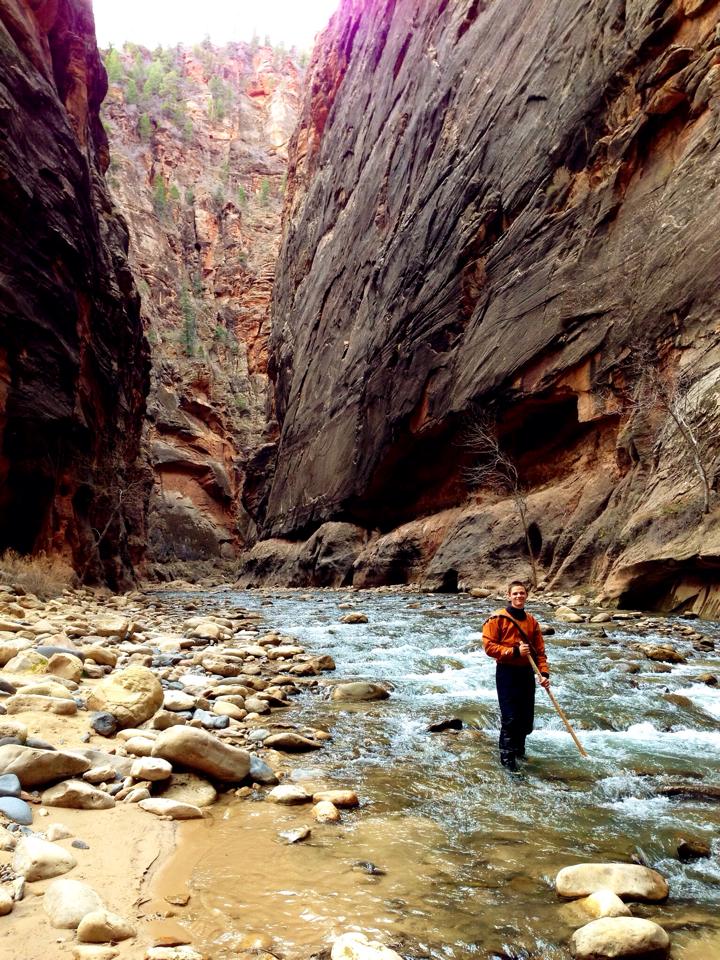 (Our son was able to go back ten years later and hike the Narrows. He said it was one of his favorite hikes!)
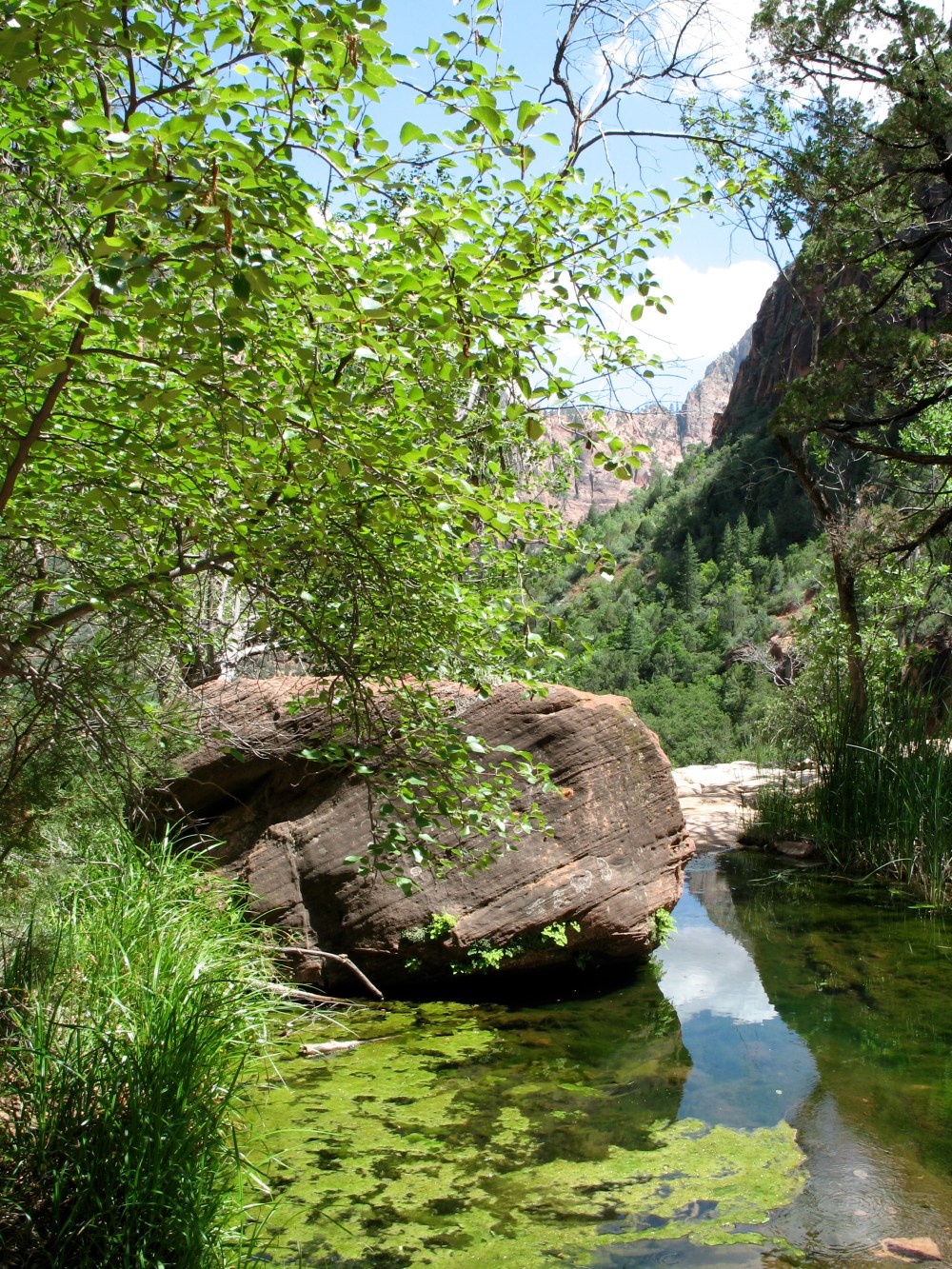
Riding the shuttle deeper into the park we were struck by the carved landscape of Navajo sandstone producing rich shades of red. The early Mormon settlers named many of these features. Zion, which means “peace or sanctuary”, was believed to be a place of gathering for these early pioneers. The shuttle provided great views of the Court of the Patriarchs including sandstone peaks named Abraham, Isaac and Jacob. Other Mormon-named peaks included Altar of Sacrifice, Cathedral Temple, The Great White Throne, and Temple of Sinawava. They also named Angel’s Landing which contains 21 switchbacks on the hike up to one of the highest lookouts in Zion. This hike is not for anyone with a fear of heights. The chain handrail is the only thing separating you from a sheer 1500-foot drop off.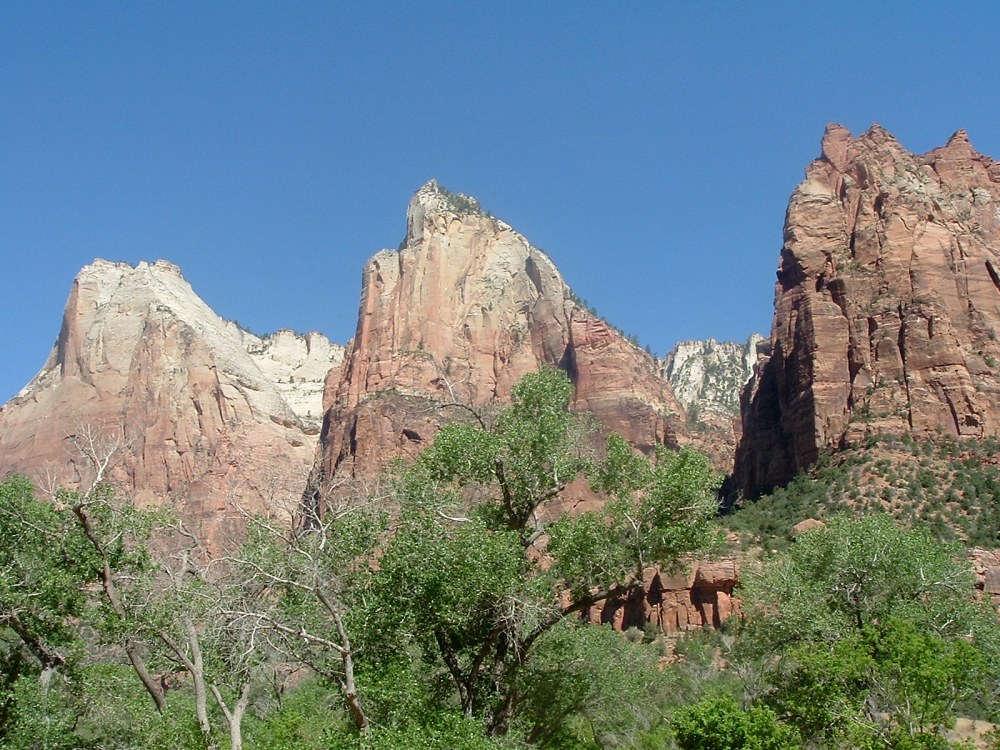 Temperatures during the summer easily reached into the 100’s. Hiking the Riverside Walk that followed the Virgin River was a welcome respite. The lush vegetation fed by this river provided nice shade in the desert climate for the deer and us. We also enjoyed exploring the Weeping Rock for cooler temperatures. Our last trail hike was to the Lower, Middle and Upper Emerald Pools.
 Had we had more time in the park, we would have gone to the Kolob Canyons Visitor Center on the north side. The Kolob Arch, one of the world’s largest freestanding natural arches, was located in this area. We would have also enjoyed exploring the numerous slot canyons.
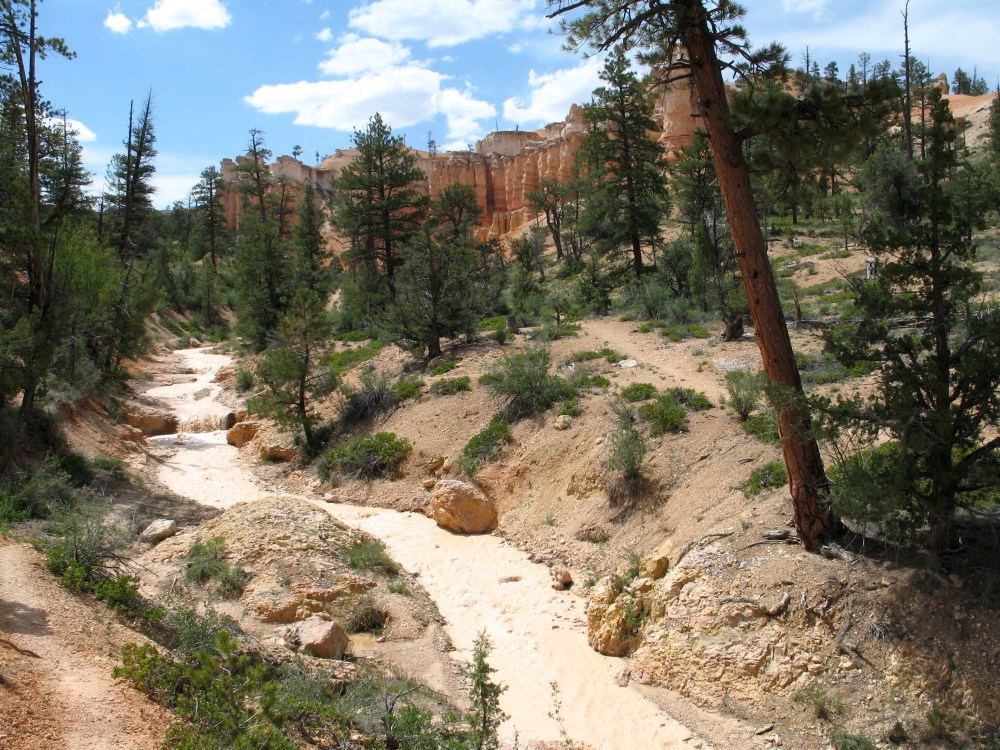
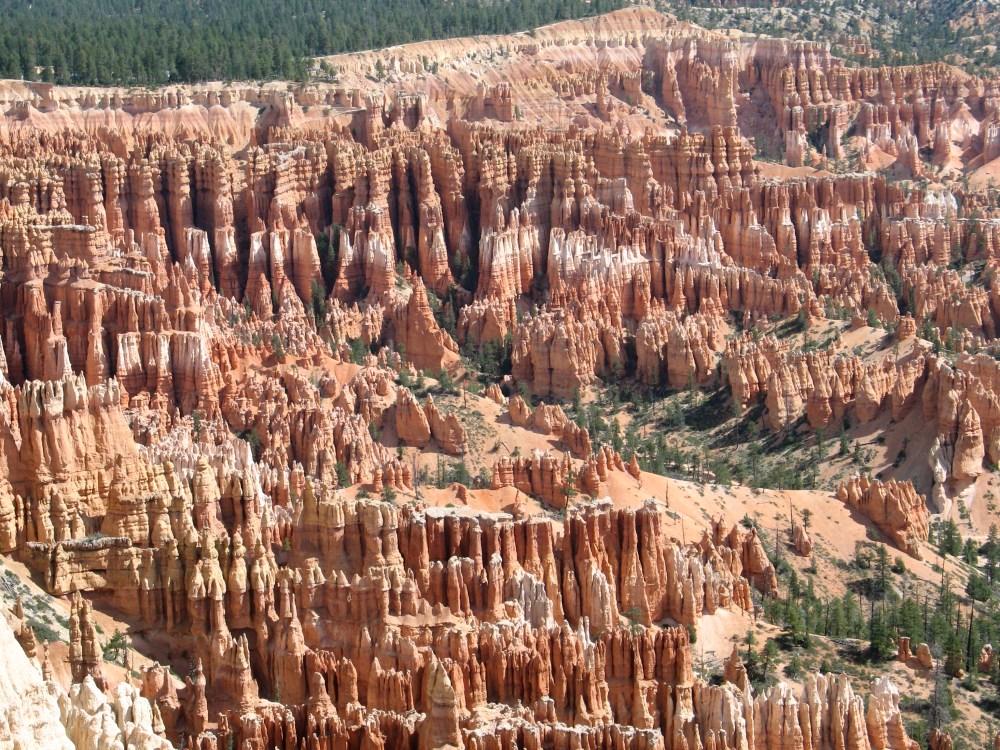 The next day we left early for the two-hour drive to Bryce Canyon. The morning light provided some of the best picture taking opportunities in the canyon. After a quick stop at the visitor center, we walked the Rim Trail hike to view the amphitheater filled with formations called hoodoos. The Paiute Indian Legend said that the people of the canyon were bad and the coyote turned them all into rocks. However, the Mormon pioneer, Ebenezer Bryce, simply said this canyon was a “helluva place to lose a cow.” We then drove over to the Mossy Creek hike to explore the hoodoos from below. The hike followed along the sandy creek trail in the canyon valley to a dripping shallow cave. This lesser known hike was definitely the road less traveled in Bryce Canyon. Fun fact-had we come earlier in the year when snow was on the ground, the park would have provided snowshoes free of charge!
 The Grand Staircase of geological formations rising from the Grand Canyon to Zion to Bryce Canyon filled us with wonder. The immense sequence of sedimentary rock layers carved out by water and time left us marveling at the vastness and uniqueness of creation and its Creator. “Ah Lord God! Behold, thou hast made the heaven and the earth by thy great power and stretched out arm, and there is nothing too hard for thee…”Jeremiah 32:17
(Next blog-Part 3 of the Great Adventure)
 The Roads Les Traveled